National
QUICK LINKS
Pro Tour Menu
Pro Tour Sponsors


SKUSA Partners


SEARCH
Next SKUSA Pro Tour Event
|
|
|


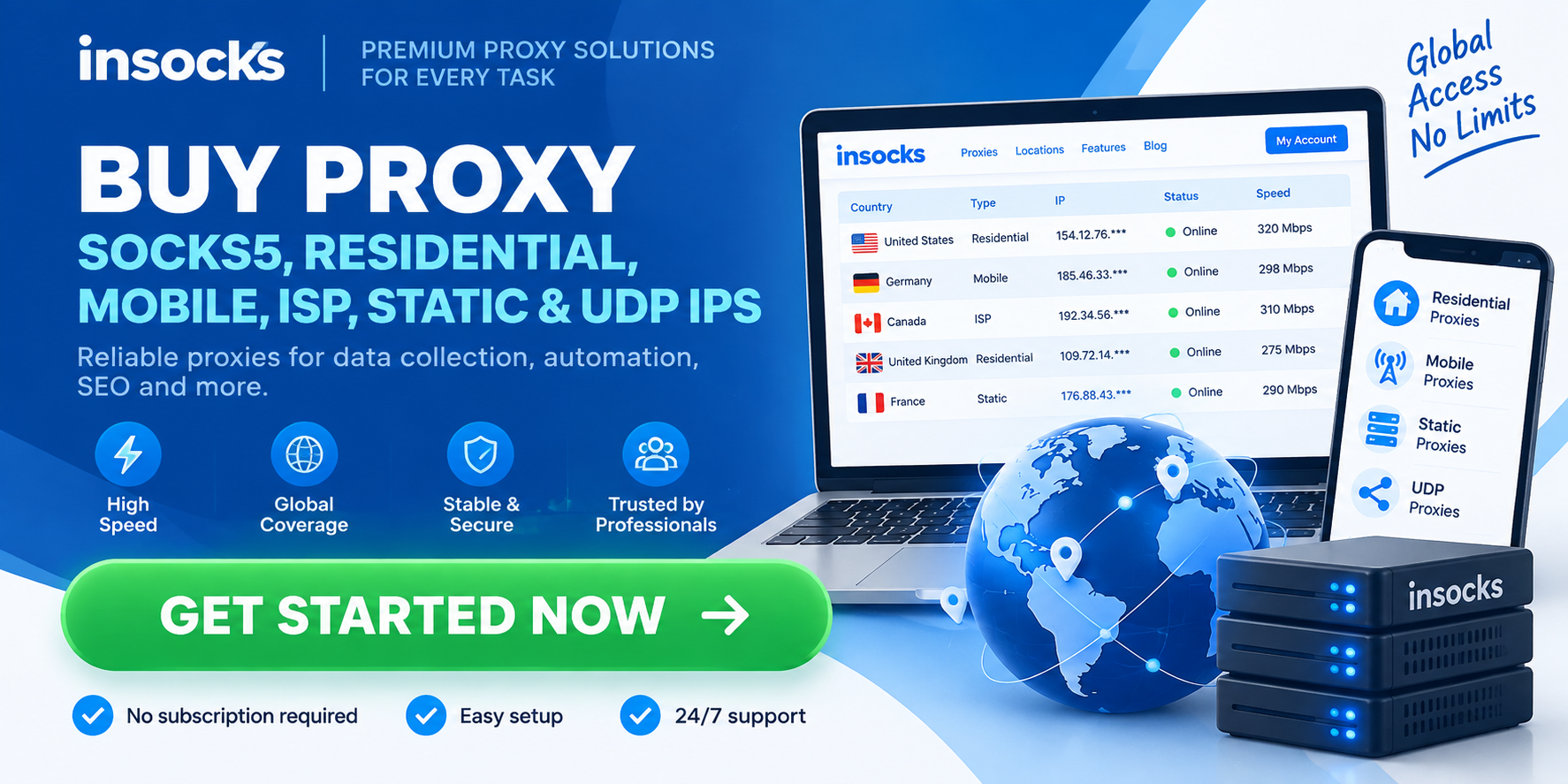
INSOCKS Residential Proxy Pool: How Residential IPs Work
Residential proxies route internet traffic through IP addresses associated with real consumer internet connections rather than traditional hosting infrastructure. For organizations that need geographically distributed network access, the INSOCKS residential pool can support testing, public data research, localization checks, and other legitimate tasks that depend on consumer ISP addresses ✨. A pool structure gives users access to multiple residential endpoints instead of relying on one fixed proxy.
Where residential IP addresses come fromResidential IPs are assigned by internet service providers to household connections. These addresses are normally associated with consumer broadband networks and appear differently from addresses registered to datacenters or hosting companies. When residential proxy infrastructure is used, outgoing traffic is routed through one of these consumer network endpoints before reaching the destination. Why a proxy pool is usefulA residential pool contains many available IP addresses that can be selected according to provider rules and user configuration. Instead of depending on a single address, businesses can work with multiple endpoints across different regions. This structure is useful when a project requires broader geographic coverage or repeated checks under varied network conditions ✅. How routing changes the visible IPWhen a request passes through a residential proxy, the destination normally sees the residential proxy address rather than the user’s direct public IP. The proxy acts as an intermediary that transfers traffic between the client and the requested service. The browser or application continues to operate normally while the visible network origin reflects the selected residential endpoint. Rotating residential sessionsMany residential proxy pools support automatic IP rotation. The address may change after a certain period, after a new session begins, or according to another rotation rule. This can help teams distribute public research requests across different endpoints while avoiding dependence on one connection. Rotation should still be documented so results remain easy to interpret ✨. Sticky residential sessionsSome workflows require greater continuity. Sticky sessions allow a residential IP to remain available for a defined period rather than changing immediately. This can be useful during multi step website testing, localization checks, or other tasks where keeping the same visible network identity makes the process easier to reproduce. Common residential proxy use casesResidential IP pools are most useful when network geography or consumer ISP routing directly affects the task. Businesses should define the purpose before choosing rotation settings or locations.
Geographic targeting across marketsResidential proxy pools may provide country, region, or city level selection depending on available infrastructure. Geographic targeting can help businesses examine how public websites differ between markets. Language, pricing, product availability, promotions, and search results may all vary based on the visitor location ✨. Residential proxies and datacenter networksDatacenter proxies typically use addresses associated with hosting facilities and server providers. They can offer high throughput and predictable infrastructure, but their network identity differs from household broadband. Residential proxies instead use consumer ISP addresses, making them more relevant when a workflow specifically requires residential network conditions. Residential proxies and mobile networksMobile proxies use IP addresses associated with cellular carriers, while residential proxies normally originate from fixed consumer internet providers. Both can represent consumer oriented traffic, but they serve different testing needs. Mobile access is often useful for smartphone and carrier focused workflows, while residential access is well suited to broader browser based and regional research tasks ✅. Factors that affect pool qualityA large number of IP addresses does not automatically mean better service. Geographic accuracy, endpoint availability, session control, response time, authentication, and routing stability all influence practical performance. Businesses should evaluate a residential pool using real tasks rather than relying only on headline network size claims ✨.
Why IP availability mattersResidential endpoints may not always be available in exactly the same way because consumer network conditions can change. A strong pool should provide enough capacity in required locations to keep workflows functioning even when individual endpoints disappear. Testing several regions can reveal whether availability remains consistent during normal working periods. Response speed and network routesResidential proxy performance depends on the route between the user, proxy endpoint, and destination. Geographic distance is only one factor because internet traffic may pass through several providers and exchange points. Businesses should measure latency using the actual websites or applications involved in their work rather than relying on a generic speed test ✨. Authentication and account protectionProxy access should be limited to authorized users and systems. Providers may use usernames, passwords, source IP authorization, or combinations of these controls. Businesses should store credentials securely, avoid unnecessary sharing, and remove access when staff responsibilities change. A proxy pool should be managed as part of normal network infrastructure. Protocol compatibility for toolsResidential proxies should work with the software used in daily operations. HTTPS support is common for browser and web based workflows, while SOCKS5 may be useful for applications requiring broader connection flexibility. Teams should confirm protocol compatibility before deploying scripts, testing platforms, or monitoring software through the proxy pool ✅. Responsible automation practicesResidential pools can be connected to approved automated tools for recurring public checks, but request volumes should remain controlled. Poor retry logic or excessive traffic can create unreliable results and unnecessary load. Teams should use sensible intervals, maintain logs, and respect the access rules of the services being monitored ❌. Testing the pool before scalingA limited pilot helps determine whether a residential proxy pool matches actual project requirements. Teams can test several locations, measure latency, verify regional accuracy, monitor failed requests, and compare sticky versus rotating sessions. Running these checks across multiple days provides a more realistic picture of reliability than one short session. Choosing the right session strategyRotation frequency should match the business task. Broad market research may benefit from multiple endpoints, while a longer localization or application test may require a stable address. Selecting the correct session model improves consistency and prevents unnecessary network changes that could complicate analysis ✨. Building reliable residential proxy workflowsResidential proxy pools provide flexible access to consumer ISP addresses across different geographic markets. Their practical value comes from combining location coverage, controlled rotation, session stability, secure authentication, and compatibility with existing tools. When businesses test these factors carefully and use residential infrastructure responsibly, they can create repeatable workflows for regional research, localization, public monitoring, and quality assurance. |